
The most common mistake isn’t one big dramatic error. It’s a series of smaller ones: applying home-country assumptions to a different market, trusting presentation over substance, choosing areas by reputation rather than street-level reality, moving too fast under emotional pressure, and budgeting only for the purchase price.
Individually, each of these looks minor. Combined, they produce the purchases buyers later wish they’d approached differently. The adaptation that prevents most of them is simpler than it sounds: accept that Portugal has its own market logic, verify rather than assume, and make space for a calm second look before committing.
How it usually starts — smaller than you’d think
Most foreign buyers who regret their Portuguese property purchase didn’t make a single “big mistake” along the way. It’s rarely that dramatic.
Usually it starts smaller. A rushed assumption. Too much trust in a listing. Falling for presentation. Using home-country logic in a different market. Skipping one check because everything “looks fine.” One by one, these decisions can become expensive — not because any of them is catastrophic on its own, but because they compound.
We’ve seen this pattern many times. Not because buyers are careless. The opposite, usually — they’re capable, successful people used to making good decisions in markets they understand well. What catches them out is that Portugal’s property market works on different logic from what they’re used to, and the instincts that served them at home stop being reliable here. This guide walks through the ten patterns we see most often, and why each one happens. The point isn’t to scare anyone off — it’s to help you spot the patterns before you’re the one making the mistake.
1Thinking Portugal works like home
This is the most common mistake, and the one that feeds many of the others. Buyers arrive with years — sometimes decades — of experience from their own country. They know how offers usually work. What good value looks like. How fast decisions should happen. What documents typically mean. What makes an area desirable.
That experience is genuinely useful. Until it gets applied too literally here, and starts leading rather than informing.
Portugal has its own logic. Listing prices relate to transaction prices differently than in Anglo-Saxon markets. Negotiation style is more relationship-driven and slower. Due diligence has its own rhythm and specific documents to verify. What makes a neighbourhood desirable in Lisbon or Porto isn’t always what would make one desirable in London or New York. When buyers don’t notice the gap between home logic and local logic, smaller mistakes start to follow — and they rarely notice until after the purchase.
The adaptation isn’t to abandon your instincts. It’s to hold them more loosely and check them against local reality more often. That single mental shift prevents a surprising amount of downstream trouble — including, very commonly, underestimating the timeline from first offer to final deed.
Not sure which route applies to you? Portugal Compass points you to it in a couple of minutes — find your route →
2Falling for the property, not studying the asset
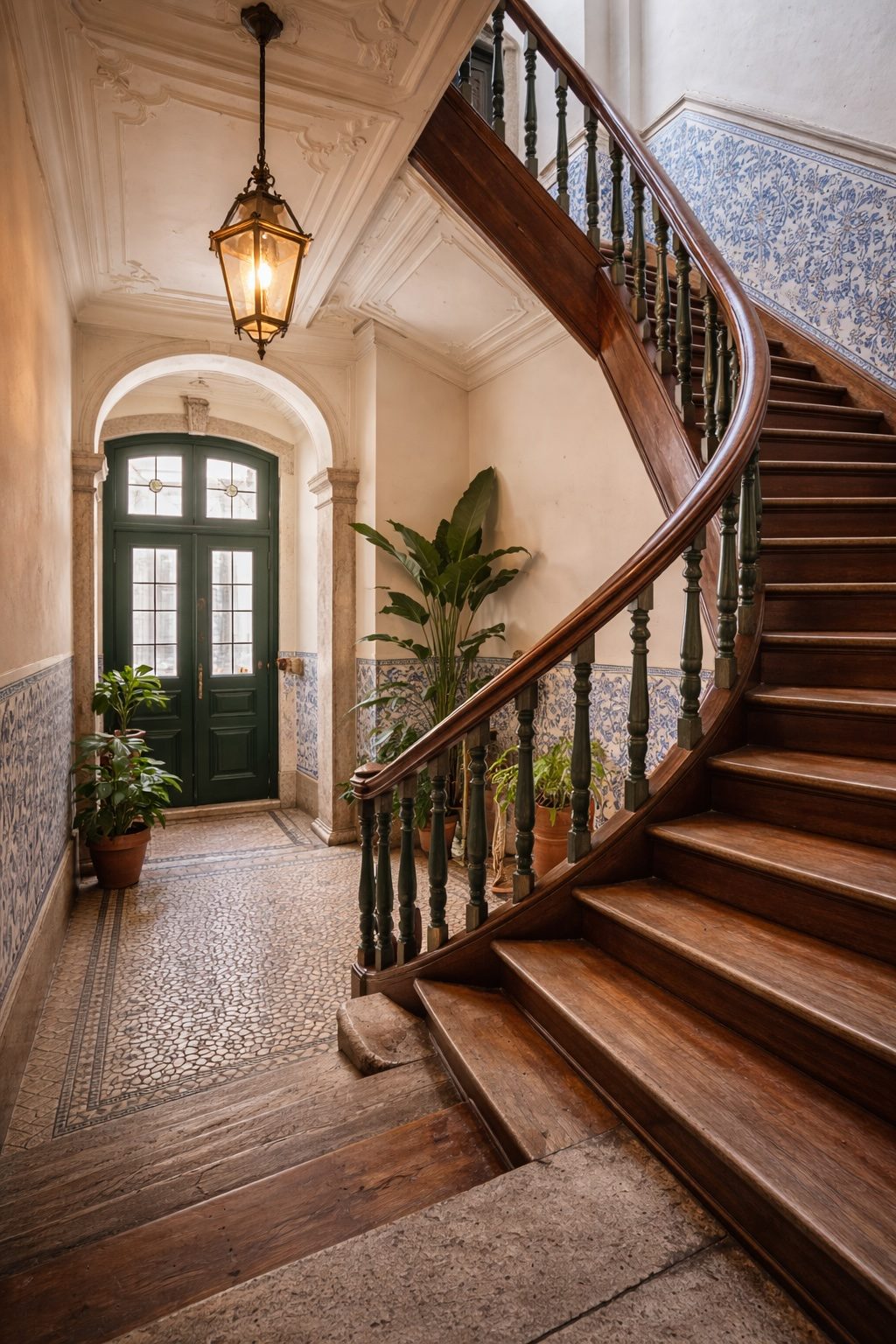
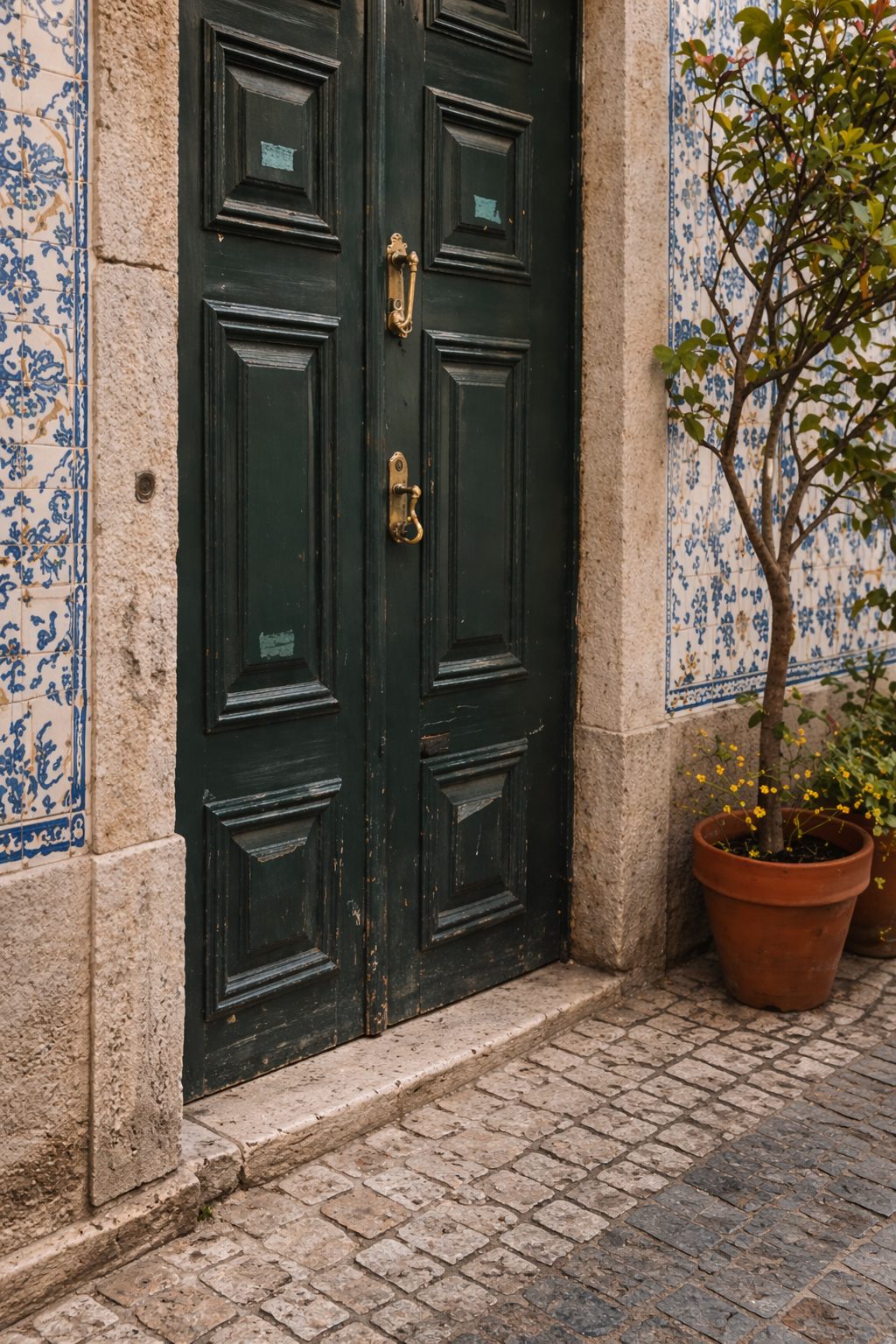
Some homes photograph beautifully. Fresh renovation. Nice furniture. Natural light at the perfect time of day. Good camera angles. A beautifully styled apartment in a characterful building with azulejos and a potted citrus tree outside looks like exactly the Portuguese property you came to buy.
But a property is more than presentation. We often encourage buyers to step back during viewings and ask a set of harder questions:
- Would I still like this empty, without the staging and the styling?
- How is the street — not the photo, the actual street at 8pm on a Tuesday?
- How is the building as a whole — not just the unit?
- How practical is the layout for how we’d actually live here?
- How easy would this be to resell in 5–10 years?
- What are the three things I’d change about it if I could?
Excitement is normal — it’s one of the reasons buying a property in Portugal is a genuinely exciting experience. But excitement should inform the decision, not lead it. The best way to test this: if you walked away and saw three more comparable properties next week, would this one still be your first choice? If the candid answer is “maybe,” you probably haven’t seen enough yet. This is particularly true when comparing new build against resale, where presentation can dramatically distort the underlying asset in either direction — covered candidly in our guide to new build vs resale property in Portugal.
3Choosing the area by reputation
Many international buyers begin their conversation with us with broad statements: “I only want Lisbon.” “Porto is better value.” “The Algarve is best for rentals.” “Cascais is for families.” These statements aren’t wrong, exactly — they’re just too general to be useful for an actual purchase decision.
One strong street in a “worse” area can outperform a weak address in a “better” one. Two apartments on the same block in Cedofeita can have meaningfully different resale appeal. An overlooked neighbourhood can contain the single best property for your specific goals. The useful conversation rarely stays at city level — it moves quickly to neighbourhood level, then street level, then building level.
If you’re still choosing between Lisbon and Porto, our Lisbon vs Porto comparison for property buyers covers the real trade-offs. And if Porto is already on your list, our guide to the best areas to buy in Porto walks through the neighbourhood-level decisions that actually matter once you’ve chosen the city.
4Assuming what exists is fully approved
This one catches foreign buyers off guard regularly. In older Portuguese buildings, it’s common to find that changes have been made over time that don’t fully match official records. Sometimes a terrace was enclosed years ago. A storage room became a bedroom. A loft was converted. An extension was added. The physical layout you’re looking at today may be different from what’s on file with the municipality or the Land Registry.
None of this automatically means disaster. Many of these changes are resolvable, and many are well-documented despite initial appearances. But it does mean the property you see with your eyes should be verified against official records before you commit. Your lawyer handles this as part of due diligence — but only if they’re specifically checking for it, which is one of several reasons independent legal representation is not optional on a Portuguese purchase.
The mistake isn’t that the seller is hiding something (though occasionally that happens). The mistake is the buyer assuming verification has already been done. In Portugal, with older buildings especially, always assume you need to check.
5Trusting listings too much
Listings are genuinely useful. They help buyers understand pricing, supply, and what’s available in different areas. They’re a good starting point for orientation. But they remain marketing material — and marketing material tells you what the seller wants you to know, not what you need to know to make a good decision.
A listing typically won’t tell you:
- Why the property has been sitting unsold for months
- How noisy the street is at different times of day
- Building issues or planned major works
- Awkward access, stairs, or parking realities
- What condominium fees actually run to, or when they’re about to increase
- Weak resale appeal or demographic shifts in the area
- Disputes with neighbours, flagged on the condominium’s minutes
- What comparable properties have actually sold for, rather than listed for
The listing begins the process. It should never end it. For a candid perspective on what independent representation adds to this stage — including who genuinely needs it and who doesn’t — see our guide to why foreign buyers use a buyer’s agent in Portugal.
6Moving too fast because of emotion
Sometimes moving quickly is genuinely necessary — a rare property in a specific street at a reasonable price occasionally does need a fast decision. But far more often, the urgency buyers feel comes from a different place:
- Fear of missing out
- Fear that prices will rise tomorrow
- Fear that another buyer is about to offer
- Fear of losing “the one”
- Fear that if they don’t act now, the window closes
Sometimes these fears are real. Often they’re manufactured — by selling agents with commissions to protect, by a competitive dynamic that isn’t quite what it seems, or by the buyer’s own emotional momentum after seeing several disappointing properties and finally finding one they like. Pressure, wherever it comes from, creates weaker decisions than calm reflection does. Strong purchases can almost always survive a 24-hour pause, a second look, and a conversation with someone objective. The purchases that can’t survive a pause usually shouldn’t have been made in the first place.
If a property truly won’t wait a day for you to think clearly about it, it’s telling you something about the market or the seller. Listen.
7Ignoring the building
Buyers naturally focus on the apartment itself — the layout, the light, the finishes, the kitchen, the bathrooms. That’s understandable. But in Portugal, especially with older building stock, the building you’re buying into can matter as much as the apartment you’re buying.
Worth checking, every time:
- Roof condition — major roof works can cost each apartment owner tens of thousands of euros when they come due
- Façade maintenance — scheduled façade renovations are a significant cost in many central Lisbon and Porto buildings
- Common areas — entrance, stairs, lifts, courtyards — their state tells you a lot about the building’s overall management
- Condominium management quality — is the building run by an organised administrator or informally by whichever neighbour ended up with it?
- Neighbour dynamics — particularly relevant if you’re considering short-term rental; disputes are visible in the condominium’s recent minutes
- Future repair costs — ask directly what’s planned in the next 2–5 years, and whether there’s a reserve fund to cover it
Request the last 12 months of condominium minutes, the current budget, and any upcoming vote items. This takes your lawyer one hour to review and routinely uncovers material issues that would otherwise have been discovered only after ownership transfer. You’re not just buying the unit. You’re buying into the building too — and in many Portuguese buildings, that’s a meaningful financial commitment on its own.
8Assuming Airbnb is automatic
Many foreign buyers still operate on the mental model: buy property in Portugal = can rent it short-term = Airbnb income. That’s not how it works, and assuming it does can turn what looked like a strong investment into one that operates at long-term rental yields instead.
Whether a specific property can legally operate as short-term rental depends on the municipality, current rules in that specific zone, the building’s governing documents, the property’s classification, and how recently the rules have changed. None of this is impossible to navigate — but none of it is automatic, and it needs to be verified before purchase, not discovered after. Our guide to Alojamento Local and short-term rentals in Portugal covers this in detail.
If short-term rental income is a meaningful part of your investment case, make AL eligibility a due-diligence priority rather than an assumption. Buying a property that can’t get a licence is one of the more expensive mistakes in this list — not because it’s unrecoverable, but because the whole investment thesis has to be rebuilt from scratch after purchase.
9Budgeting only for the purchase price
The agreed sale price is only part of the real number. Buyers coming from abroad regularly under-budget for the additional costs of buying in Portugal — not by small amounts, but by 10–15% of the purchase price in many cases.
What gets under-budgeted, consistently:
- IMT (property transfer tax) — the biggest variable cost; since May 2026 it depends first on your residency status (non-residents pay a flat 7.5%, with relief if you become resident within two years or let at a moderate rent), then on price and use
- Stamp duty — 0.8% of purchase price, straight and flat
- Legal fees — typically 1–2% of the purchase price
- Notary and registration — smaller but real
- Mortgage costs — valuation, arrangement fees, stamp duty on the loan itself, mandatory insurance
- Currency exchange costs — for non-euro buyers, often the single largest controllable cost
- Furnishing and setup — the gap between keys and livable is usually bigger than buyers expect
- Condominium fees and reserve fund contributions — ongoing, not one-off
A good purchase can feel like a less good purchase once the real total cost is understood late. The fix is straightforward: build a Total Acquisition Budget separately from your Purchase Budget, and shop within the Total. Our guide to the hidden costs of buying property in Portugal walks through every cost category with a worked example.
10Not having independent professionals on your side
The final mistake we see is buyers trying to save money on the one thing that saves them money: independent representation.
In Portugal, the vast majority of estate agents represent the seller. A property listing is a marketing channel, not a neutral service. The agents showing you the apartment are not, on average, working for you — regardless of how helpful or charming they are. Without someone independently on your side — a good lawyer at minimum, and for most international buyers a buyer’s agent too — you’re navigating a market where everyone else in the conversation has commercial interests that diverge from yours.
This isn’t pessimism about Portuguese estate agents. It’s just structural reality: their role is sell-side. That works fine when you’re equipped to represent your own buy-side interests effectively. For foreign buyers, particularly those buying remotely or for the first time, having independent representation on the buy-side changes the substance of the transaction — not just the comfort level.
What smart buyers do differently
After years of working with international clients, we see the same habits repeatedly among buyers who end up happy with their Portuguese purchases:
- They stay open-minded — about areas, property types, price points, and what the “right” property looks like
- They ask more questions than feels strictly necessary — and take the time to understand the answers
- They verify rather than assume — documents, history, building state, licensing status, market comparables
- They think beyond aesthetics — to layout, building quality, condominium management, and future resale
- They care about resale even if they plan to stay forever — because plans change, and the liquidity of the property is a feature regardless
- They accept that local knowledge has real value — via legal representation, independent advice, and sometimes a buyer’s agent, depending on situation
- They build in time — for reflection, second viewings, and checking their own enthusiasm against their stated criteria
None of this is complicated. None of it requires special expertise. It’s mostly discipline and an attitude of “I don’t yet understand this market well enough to shortcut the process.” Which, frankly, is the correct attitude for most international buyers most of the time — regardless of how experienced they are in property elsewhere.
What this really comes down to
Portugal can be an excellent place to buy property. The market has genuine strengths, the lifestyle is real, the legal system protects buyers reasonably well once they’re properly represented, and the returns — financial and otherwise — have rewarded many international buyers over the past decade.
But the buyers who do best here are the ones who adapt to the market in front of them, rather than assuming it works like home. That single mental shift prevents the majority of the mistakes in this article. It’s not about being more cautious or slower across the board — it’s about recognising which of your instincts transfer and which ones don’t, and filling the gaps with local knowledge before the gaps become problems.
For a broader picture of the buying process in Portugal from first search to final deed, our complete 2026 guide to buying property in Portugal as a foreigner covers every stage.